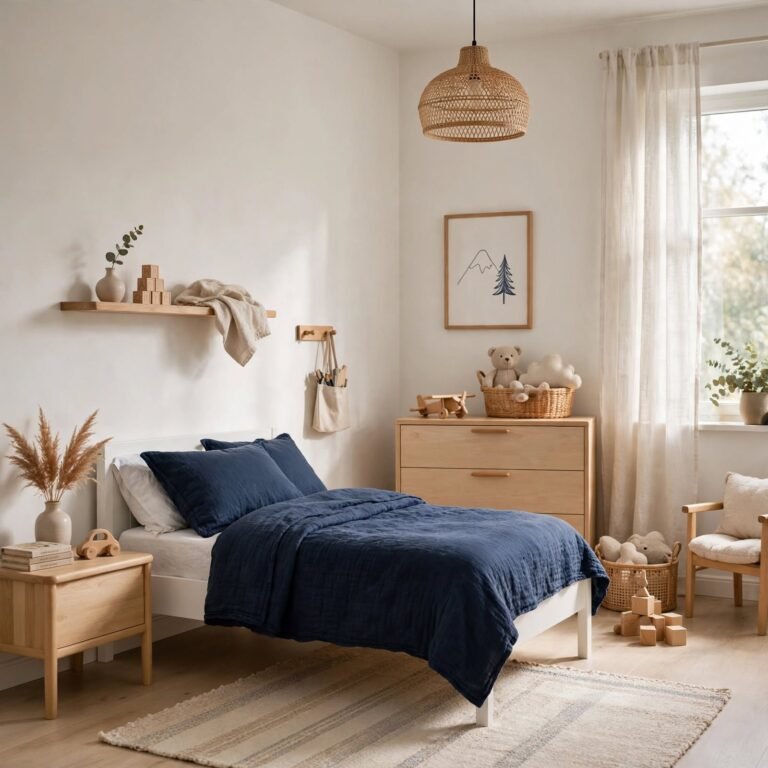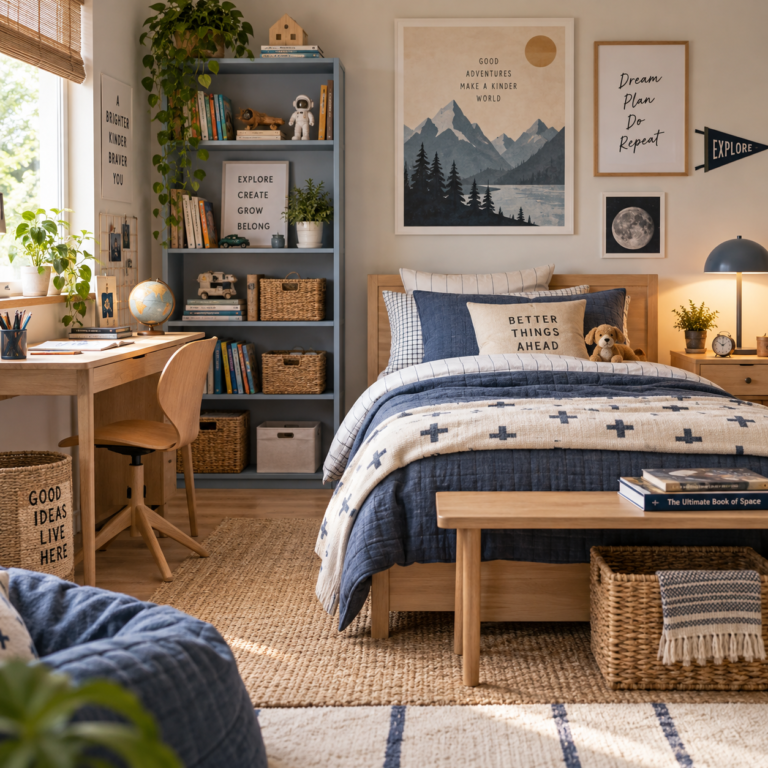

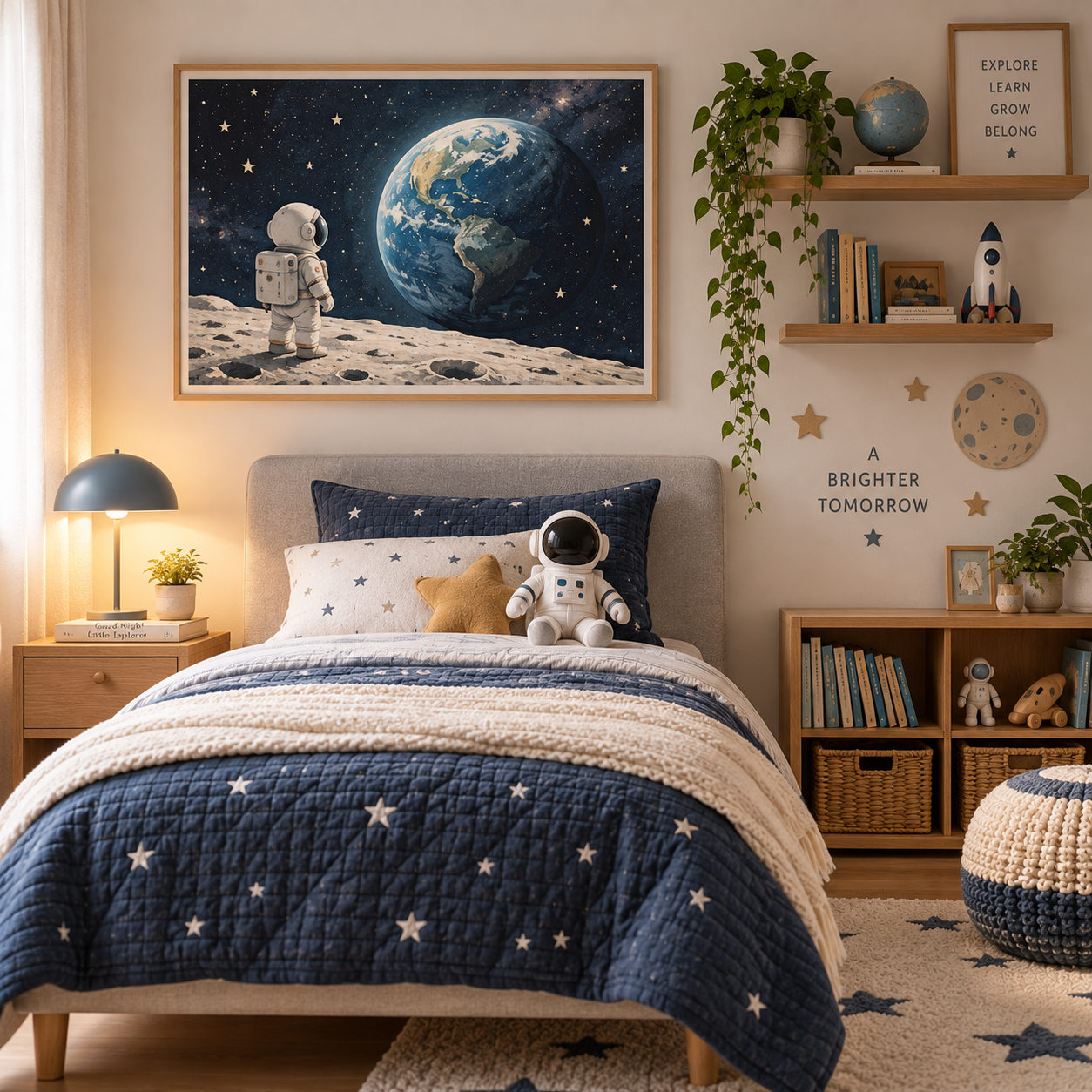
Wall decor can completely change how a kids room feels. Even when the furniture is simple, the right artwork, shelves, and small details can make the room feel more complete and more personal.
The goal is not to fill every empty wall. A finished room often comes from choosing a few pieces carefully, giving them enough space, and making sure they work with the rest of the room rather than competing with it.
Here are 12 ideas for creating kids room walls that feel playful, balanced, and thoughtfully put together.
1. Start With One Main Focal Point
A strong focal point can make the whole room feel more organized.
This might be a larger piece of wall art above the bed, dresser, reading corner, or play area. One well-scaled piece often creates more impact than several smaller decorations scattered around the room.
It also gives the rest of the wall decor a clear starting point.
2. Use Wall Art That Reflects the Child’s Interests
The room should feel connected to the child who uses it.
Space, dinosaurs, ocean life, animals, nature, vehicles, or imaginative scenes can all work well if they genuinely reflect the child’s interests.
The theme does not need to cover every wall. Even one piece of artwork can introduce enough personality.
3. Keep the Area Above the Bed Simple
The wall above the bed is usually one of the most important visual areas in the room.
Instead of filling it with shelves, signs, garlands, and several prints, consider using one main artwork with enough empty space around it.
A simpler arrangement often feels calmer and makes the artwork easier to appreciate.
4. Create a Small Gallery Wall
A gallery wall can work beautifully in a kids room when the pieces feel connected.
Try using two or three prints with similar colors, themes, or framing styles rather than mixing many unrelated images.
Keeping the spacing consistent helps the arrangement feel intentional instead of busy.
5. Add Floating Shelves for Display
Wall shelves are useful when you want to combine storage and decoration.
A small shelf can hold books, a favorite toy, a framed illustration, or a few meaningful objects.
Avoid overcrowding it. A few carefully chosen pieces usually look better and are easier to update as the child grows.
6. Frame the Child’s Own Artwork
Not every piece on the wall needs to come from a store.
Framing a child’s drawing or painting can make the room feel much more personal.
You can rotate the artwork over time, which gives the room an easy way to change without replacing larger decor.
7. Use a Simple Name or Initial Display
A name sign or single initial can add a personal touch without becoming too decorative.
Choose a simple style that works with the rest of the room rather than using something overly themed.
This can be especially useful in nurseries or shared rooms where you want to create a small sense of ownership.
8. Introduce Texture on the Wall
Wall decor does not have to be flat.
Woven pieces, fabric banners, simple wall hangings, or natural materials can add warmth and softness.
Texture can be especially helpful in rooms with a very simple color palette because it adds visual interest without adding too many colors.
9. Use Wall Hooks as Part of the Design
Practical items can also contribute to the look of the room.
A row of simple wall hooks can hold a backpack, hat, small bag, or dress-up item while also helping keep the floor clear.
Choose hooks that are easy for the child to reach if you want them to help manage their own things.
10. Leave Some Walls Almost Empty
A finished room does not need decoration everywhere.
Leaving part of the wall open creates visual breathing room and helps the decorated areas stand out more.
This is especially useful in smaller rooms where too many wall elements can quickly make the space feel crowded.
11. Match the Scale of the Decor to the Furniture
Wall decor often looks unfinished when the size feels disconnected from the furniture below it.
A very small picture above a wide bed can look lost, while an oversized piece above a tiny shelf can feel heavy.
Try to choose artwork that feels proportionate to the bed, dresser, desk, or reading area it sits above.
12. Choose Pieces That Can Grow With the Room
Some wall decor can stay relevant for years if the design is not too babyish or too specific.
Nature scenes, space illustrations, ocean art, maps, abstract designs, and more detailed animal artwork can often work across several age stages.
Choosing flexible pieces means the room can change gradually instead of needing a complete redesign.
Wall Decor Should Support the Room, Not Overwhelm It
The most successful kids room walls usually have a clear purpose.
Some pieces add personality, some create a focal point, and some simply help the room feel warmer or more complete.
The key is balance. When wall decor works with the furniture, colors, and interests already in the room, the space can feel playful without becoming cluttered.
A thoughtful wall does not need more decoration. It just needs the right pieces in the right places.