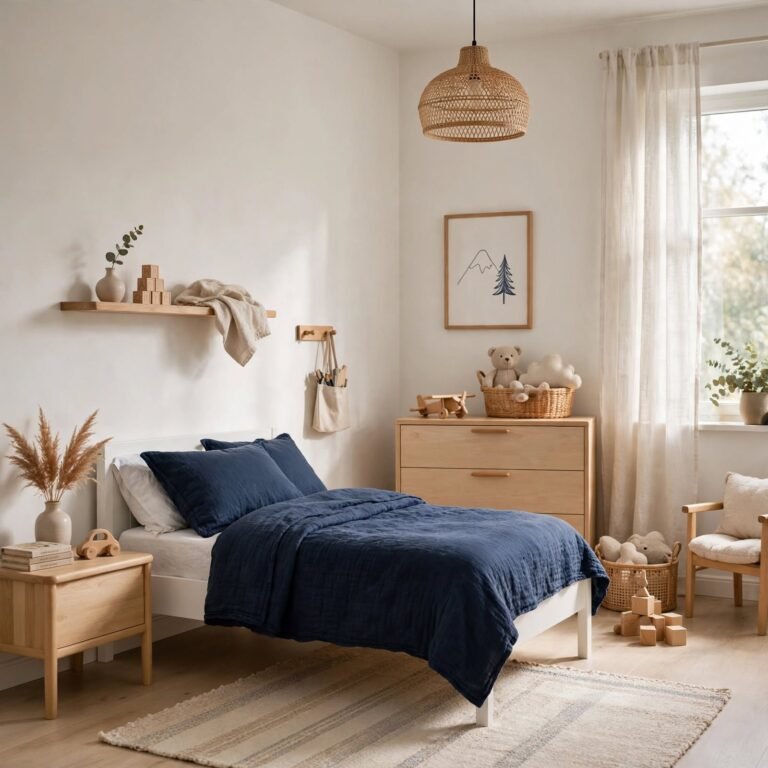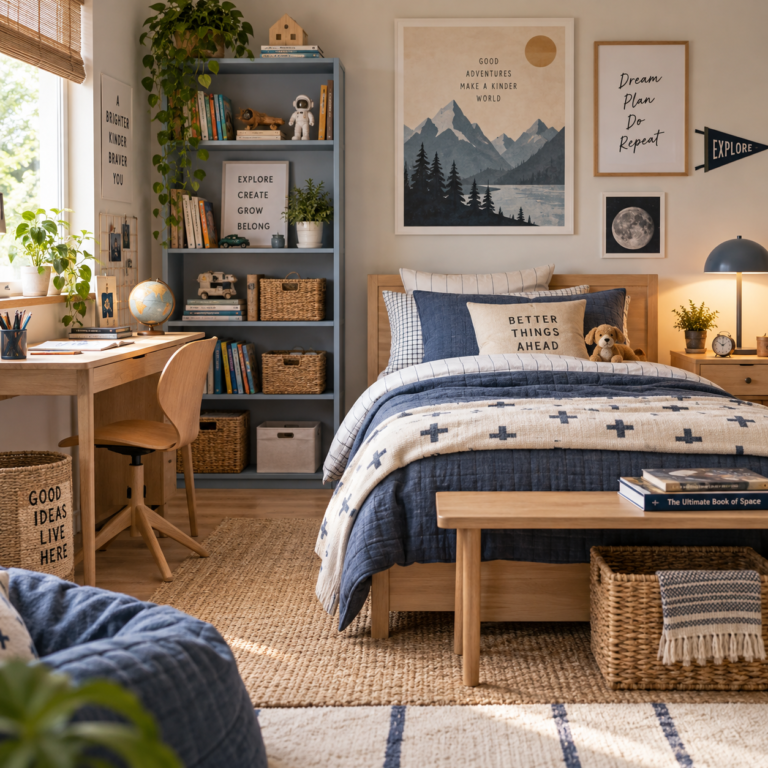

A child’s room does not need to be packed with color, toys, and decorations to feel fun. In fact, some of the most inviting kids rooms are the ones that balance imagination with a sense of calm.
The goal is not to create a picture-perfect room. It is to create a space that feels personal, comfortable, and easy for a child to enjoy every day.
Here are 12 ideas for building a room that feels playful without becoming chaotic, and thoughtful without feeling too grown-up.
1. Start With a Simple Color Palette
A calm room usually begins with a limited color palette.
Soft blues, warm neutrals, muted greens, gentle pinks, and natural wood tones can create a comfortable base. From there, brighter colors can be added through artwork, toys, bedding, or smaller accessories.
Keeping the larger surfaces quieter gives the room more flexibility as the child’s interests change.
2. Choose One Strong Theme Instead of Many
Children often love several things at once—space, dinosaurs, animals, cars, the ocean, or sports.
You do not need to include all of them in the room.
Choosing one main theme or visual direction helps the space feel more intentional. Other interests can still appear through books, toys, or smaller decorative details without competing for attention.
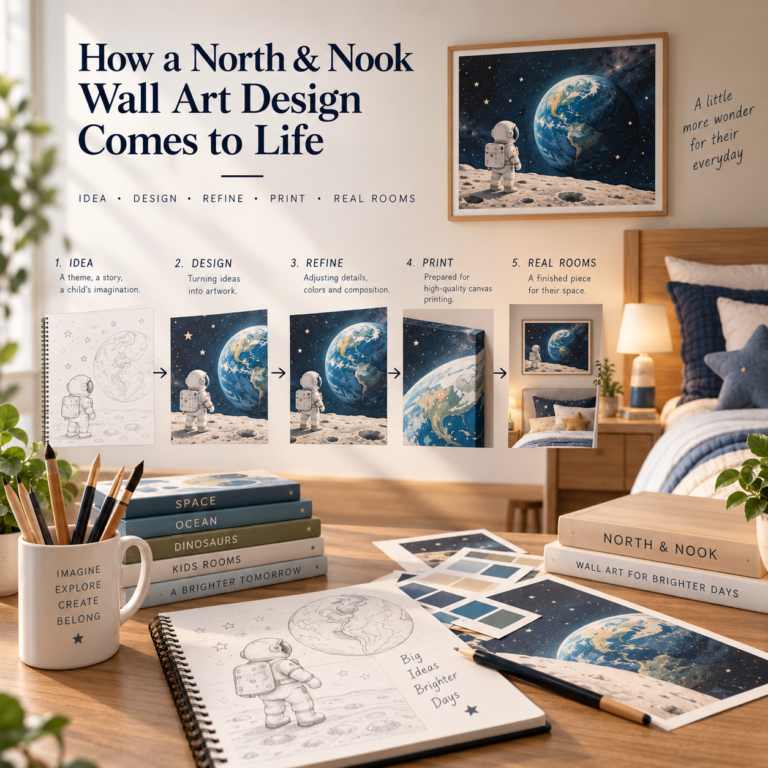
3. Let Wall Art Do More of the Work
Wall art can completely change the mood of a kids room without taking up floor space.
A single large canvas or a small coordinated group of prints can create a focal point above the bed, dresser, reading corner, or play area.
It is often better to choose one strong piece than to fill every available wall with decorations.
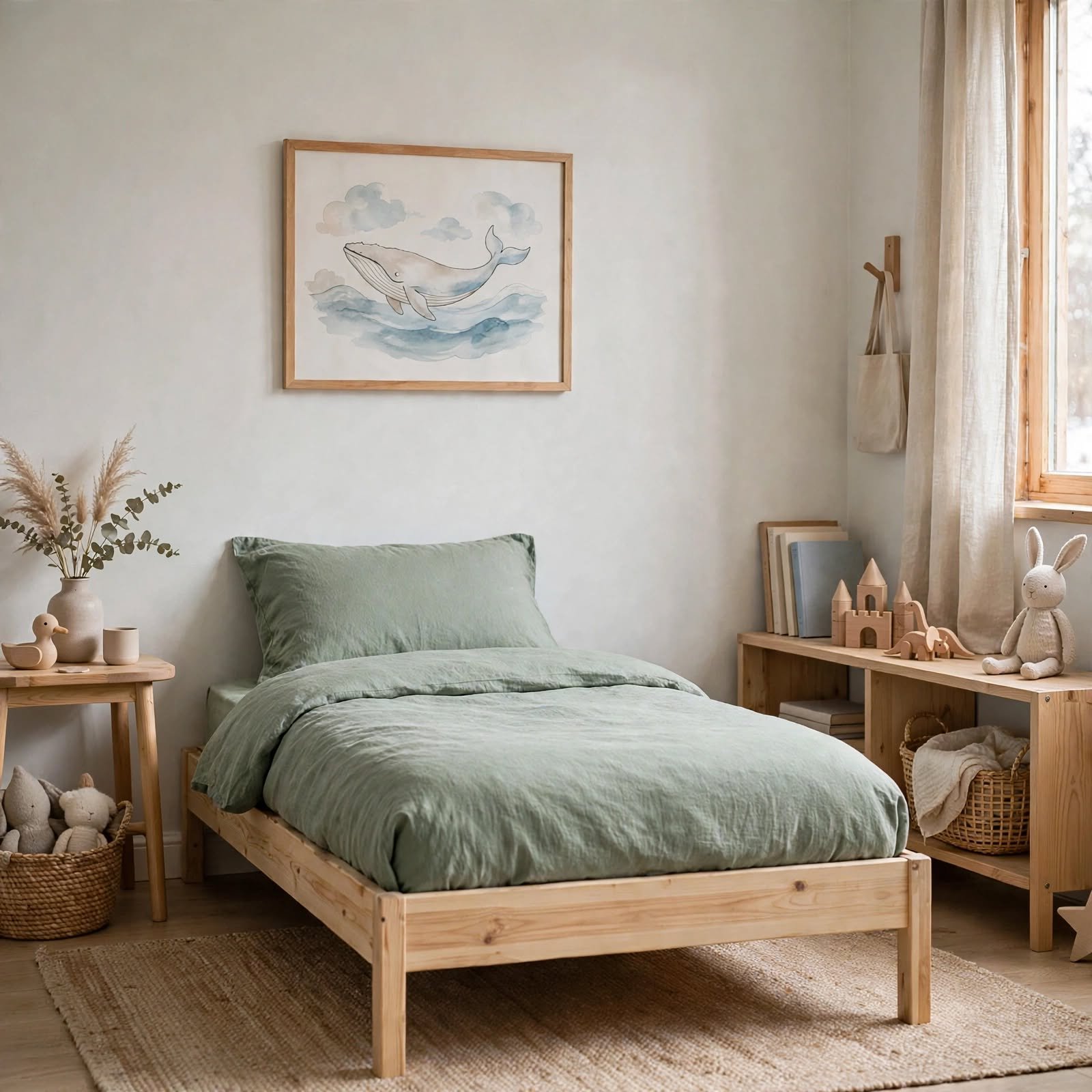
4. Keep the Bed Area Visually Quiet
The bed is usually the largest object in the room, so the area around it already has a lot of visual weight.
Instead of adding shelves, signs, garlands, and multiple decorations above the headboard, keep this area simple.
One piece of artwork, a small bedside lamp, and some breathing room can make the sleeping area feel much calmer.
5. Create a Small Reading Corner
A reading corner does not need much space.
A floor cushion, a small chair, a basket of books, and a soft light can be enough to create a place that feels separate from the rest of the room.
It also gives the child another way to use the room beyond sleeping and playing.
6. Use Storage That Children Can Reach
A room stays calmer when children can easily put things away themselves.
Low shelves, baskets, bins, and open storage work well because they are simple to use.
The goal is not to hide every toy. It is to give everything a clear place so the room can return to a more organized state without too much effort.
7. Add Personality Through Smaller Details
A thoughtful room does not need large themed furniture.
Smaller items often do the job better.
A favorite stuffed animal, a special pillow, a framed drawing, a name sign, or a few meaningful objects can make the room feel personal without locking the design into one theme.
8. Mix Playful Pieces With Simple Furniture
Children’s décor can be fun while the larger furniture stays neutral.
A simple bed, dresser, or shelving unit can work for many years. More playful elements can come from bedding, wall art, rugs, cushions, and accessories.
This makes the room easier to update as the child grows.
9. Leave Some Empty Space
Empty space is part of the design.
Not every wall needs artwork, and not every corner needs furniture.
A little visual space helps the room feel calmer and gives important pieces more impact. It also leaves room for future changes instead of making the space feel finished forever.
10. Use Soft Lighting Where Possible
Lighting changes how a room feels more than many decorative pieces do.
A small bedside lamp, warm reading light, or soft ambient lighting can make the room feel comfortable in the evening.
Bright overhead lighting is useful, but softer secondary lighting often makes the room feel more welcoming.
11. Let the Child’s Interests Guide the Room
A thoughtful kids room should reflect the child, not just a design trend.
If they love space, sea animals, dinosaurs, art, music, or building things, let that interest appear somewhere in the room.
It does not need to dominate everything. Even one strong visual reference can make the space feel much more personal.
12. Design for Change
Children grow quickly, and their interests change just as fast.
A room works better long term when the main furniture and layout are flexible.
Use items that are easy to change—artwork, bedding, cushions, baskets, and accessories—to carry the theme. This makes it much easier to refresh the room later without starting again from the beginning.
A Kids Room Can Be Fun Without Feeling Busy
A playful room does not need more things. It needs the right things.
When color, storage, artwork, furniture, and open space work together, the room can feel imaginative and calm at the same time.
The best kids rooms usually have enough personality to feel special, but enough simplicity to remain comfortable for everyday life.
That balance is what helps a room feel thoughtful—not because every detail matches, but because each part has a reason to be there.
Title: 12 Kids Room Ideas for a Space That Feels Playful, Calm, and Thoughtful
Slug: 12-kids-room-ideas-for-a-space-that-feels-fun-and-thoughtful
Suggested excerpt: Discover 12 practical kids room ideas for creating a space that feels playful, calm, personal, and easy to update as your child grows.