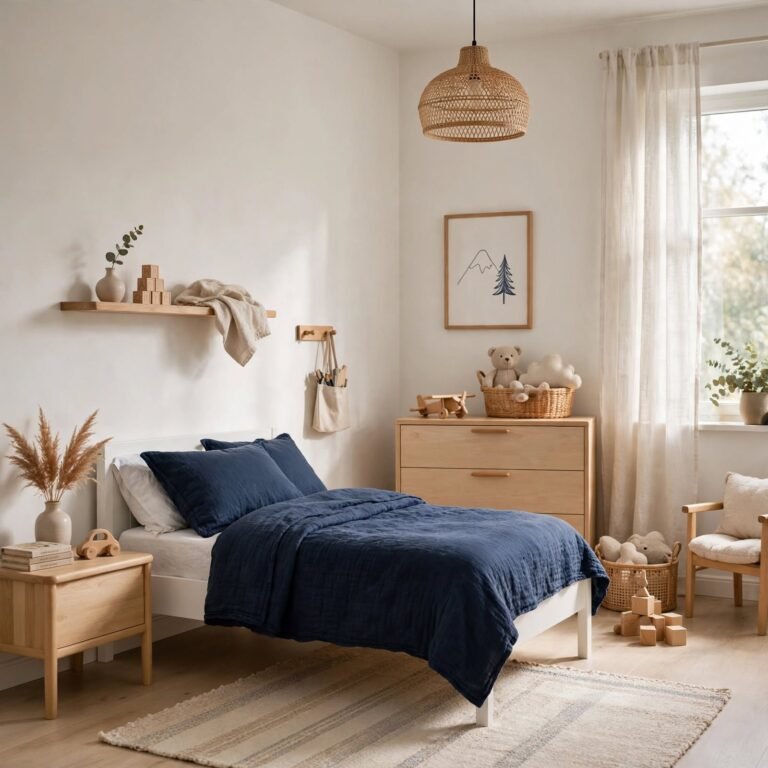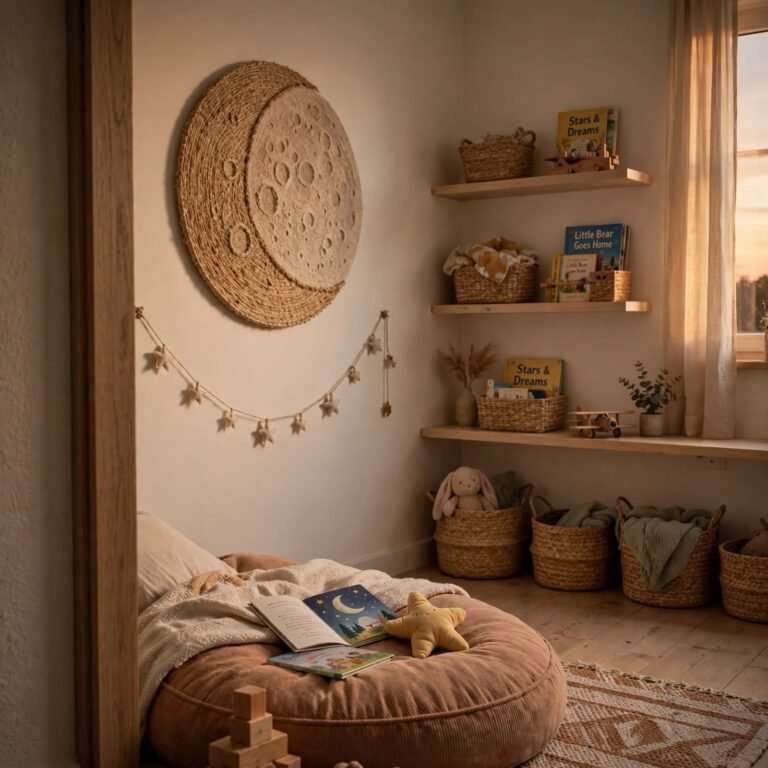

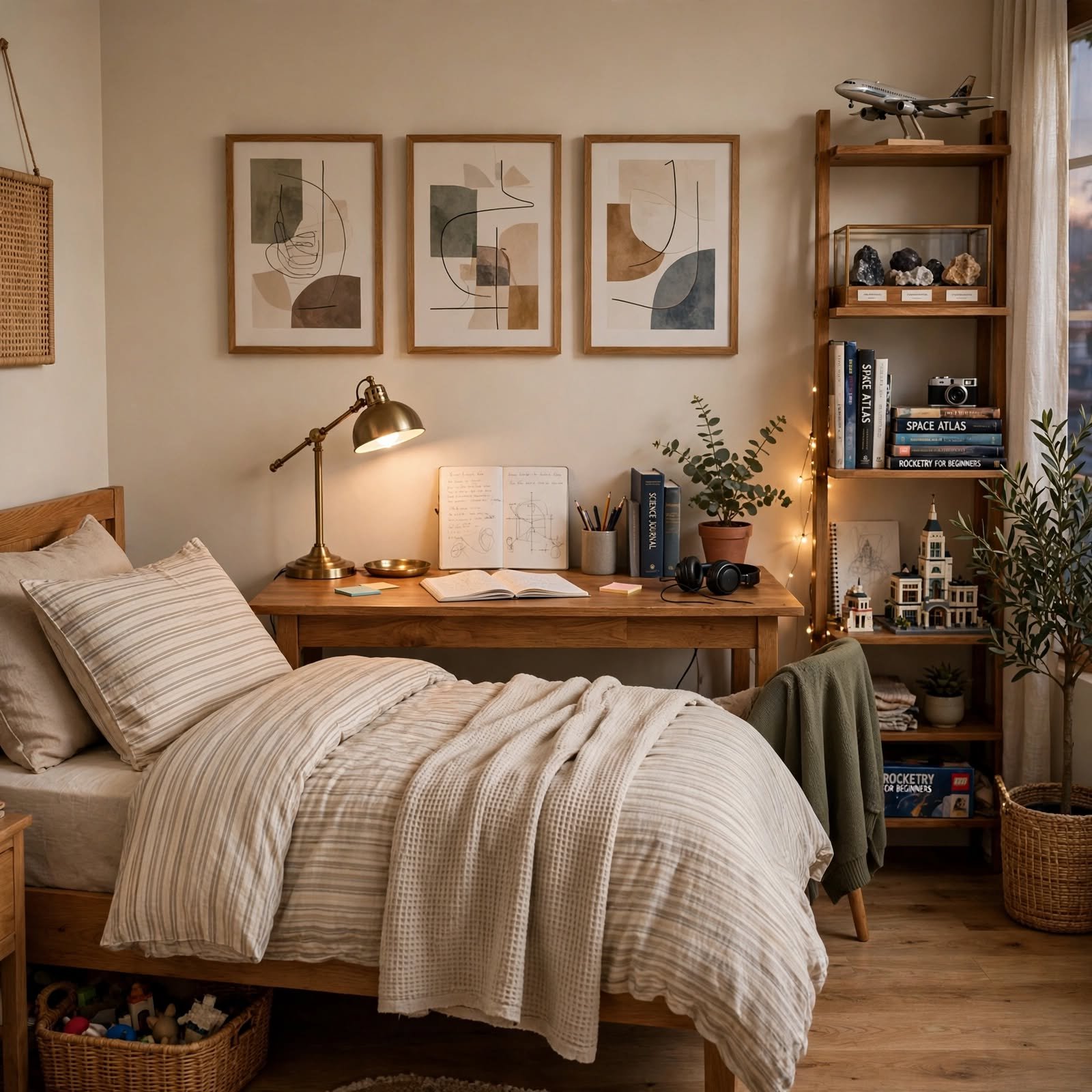
A child’s room rarely stays the same for long.
The toys change, favorite colors shift, hobbies become more important, and eventually the room that once felt perfect can start to feel too young. That does not mean the whole space needs to be replaced.
A few thoughtful updates can help the room grow with the child while keeping the furniture, layout, and pieces that still work.
Here are 10 practical ways to refresh a kids room without starting over.
1. Update the Wall Art First
Wall art is one of the easiest ways to change the feeling of a room.
A younger child may love very playful illustrations, while an older child might prefer space, ocean scenes, nature, maps, abstract art, or more detailed designs.
Changing one main piece of artwork can make the room feel noticeably more mature without changing anything else.
2. Refresh the Bedding
Because the bed takes up so much visual space, new bedding can quickly change the overall look of the room.
Bright character prints can gradually be replaced with stripes, checks, simple patterns, deeper colors, or a more subtle version of the child’s favorite theme.
The bed itself can stay exactly the same.
3. Simplify the Color Palette
Rooms for younger children often contain many bright colors at once.
As the child grows, using a more limited palette can make the room feel calmer and more grown-up.
You do not need to remove color. Instead, choose a few main shades and repeat them through bedding, wall art, rugs, storage, and accessories.
4. Add a Proper Study Area
As schoolwork becomes more important, the room may need a dedicated place for reading, homework, drawing, or computer use.
A simple desk, comfortable chair, good task light, and a little storage can be enough.
The goal is to create a place where the child can focus without making the room feel like a classroom.
5. Change How Toys Are Stored
Toy storage needs often change with age.
Large bins may become less useful as children move toward books, art supplies, building sets, collections, electronics, sports equipment, or hobby materials.
Instead of removing the storage, adapt it. Shelves, drawers, baskets, and cabinets can continue to work in different ways.
6. Make Space for New Interests
As children grow, their interests often become more specific.
They may start caring more about music, science, art, sports, gaming, reading, photography, or building things.
A room does not need a complete new theme every time this happens. A shelf, desk corner, wall display, or single artwork can be enough to reflect a new interest.
7. Remove What No Longer Feels Right
Sometimes refreshing a room is less about adding and more about taking away.
Old stickers, babyish decorations, unused toys, and accessories that no longer fit can make the space feel younger than it needs to.
Removing a few things can create a surprising sense of change.
8. Improve the Lighting
Lighting becomes more important as the room starts serving more purposes.
A bedside lamp, reading light, or desk lamp can make the space feel more functional and more mature.
Soft lighting also helps the room feel comfortable in the evening, especially when the child is reading or winding down before bed.
9. Let the Child Help Make Decisions
Older children usually want more say in how their room looks.
That does not mean they need complete control over every detail.
Giving them a few choices—such as choosing between two artworks, selecting a bedding color, or deciding what goes on a shelf—can help the room feel more personal.
It also makes the update feel like something they are part of rather than something being done for them.
10. Keep the Main Furniture Flexible
The easiest rooms to update are usually built around furniture that can work across different ages.
A simple bed, dresser, desk, or shelving unit can often stay for years.
Then the parts that are easier to change—wall art, bedding, rugs, lamps, cushions, and accessories—can carry the personality of the room.
This makes future updates much easier and less expensive.
Let the Room Change Gradually
A child’s room does not need a complete makeover every few years.
It can change naturally over time.
One year you might replace the wall art. Later, the bedding changes. A desk gets added. Toys slowly give way to books, hobbies, and personal collections.
That gradual approach often creates a room that feels more authentic because it reflects the child’s life as it changes.
The goal is not to make the room feel older as quickly as possible. It is to create a space that still feels comfortable, useful, and personal for the stage the child is in now.
Title: 10 Ways to Refresh a Kids Room as Your Child Grows
Slug: 10-ways-to-update-a-kids-room-as-your-child-gets-older
Suggested excerpt: Discover 10 simple ways to refresh a kids room as your child grows, from updating wall art and bedding to improving storage, lighting, and study space.