
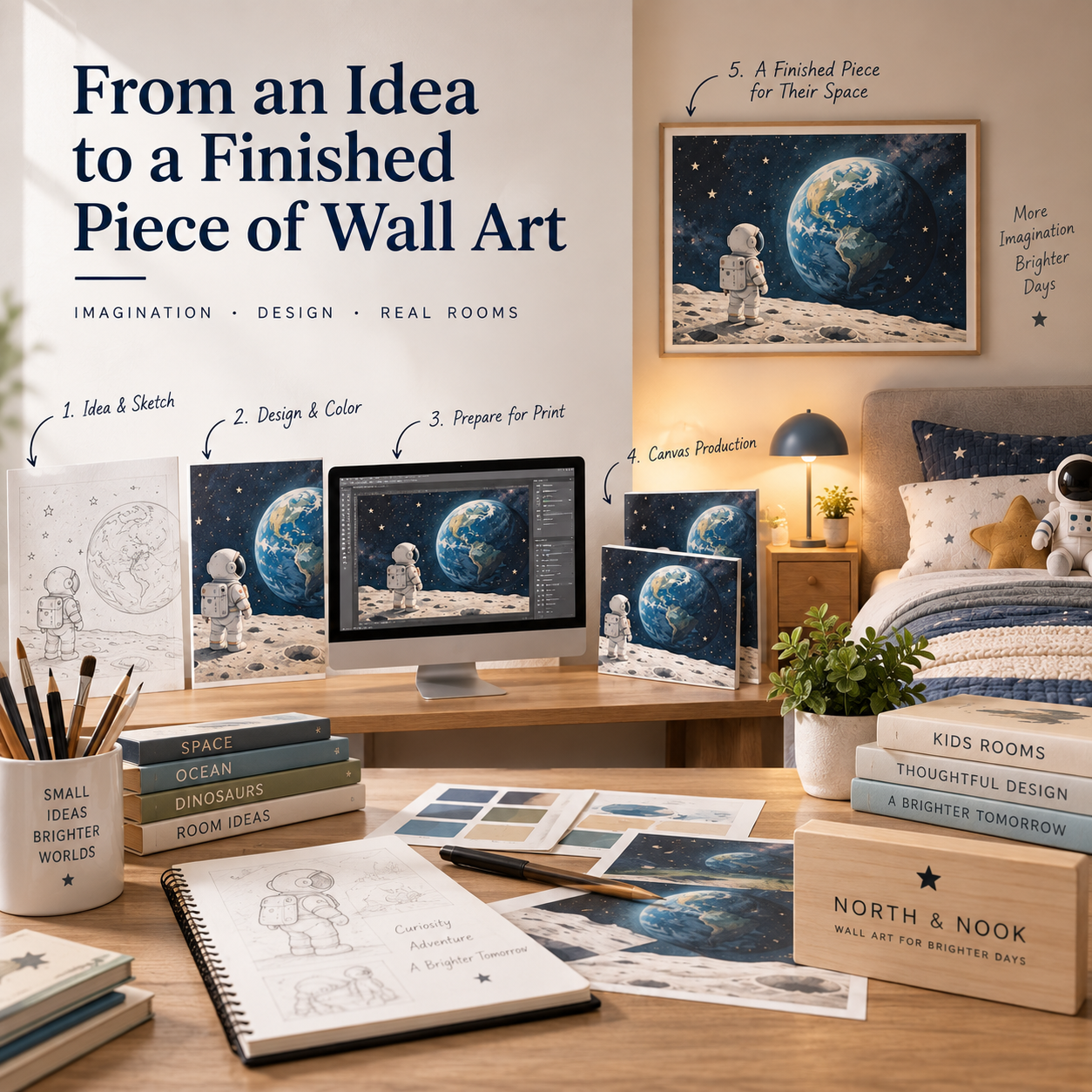
Every finished piece of wall art begins long before it appears on a wall.
It starts with a simple idea—perhaps a child fascinated by space, a calm ocean scene, a dinosaur adventure, or a room that needs one strong focal point. From there, the design gradually takes shape through composition, color, scale, and many small decisions that are easy to overlook once the artwork is finished.
At North & Nook, the goal is not simply to create an attractive image. The artwork needs to work as part of a real child’s room.
That changes the way the design is approached from the beginning.
It Starts With the Room
Before thinking about individual objects or decorative details, the first question is usually about the space itself.
Where might the artwork hang?
Above a bed? Over a dresser? In a reading corner? On a wider wall where a landscape format would make more sense?
The intended placement affects almost everything that follows, including orientation, visual balance, and how much open space the composition needs.
A piece designed for a wide area above a bed should not feel cramped. A vertical artwork for a narrower wall needs a different structure entirely.
The room comes first, and the artwork is designed to belong there.
Building the Main Idea
Once the purpose of the piece is clear, the central idea can begin to take shape.
For a space design, the main subject might be an astronaut, Earth, a rocket, or a distant group of planets. For an ocean piece, it could be a whale moving through open water. A dinosaur design might focus on one large creature rather than a crowded prehistoric scene.
Choosing a clear main subject helps the artwork feel stronger.
Not every available element needs to be included. In many cases, removing unnecessary details creates more impact than adding more.
Composition Matters More Than Decoration
A finished illustration can contain beautiful individual elements and still feel wrong if the composition is unbalanced.
The eye needs somewhere to begin.
That is why the relationship between the main subject, background, open space, and smaller supporting details is considered carefully.
A large planet may balance a small astronaut. A whale may need open water around it. A dinosaur may feel more dramatic when the landscape gives it space rather than surrounding it with many competing objects.
The aim is to create a scene that feels complete without making the room feel visually crowded.
Choosing Colors for a Real Room
Color is not selected only because it looks good inside the artwork.
It also needs to work with the kind of interiors where the piece may eventually hang.
Deep navy and blue can pair naturally with white, gray, light blue, and warm wood. Softer ocean colors can work with cream, beige, muted green, and natural textures. Dinosaur designs can use earthy greens and warm neutrals without making the room feel overly themed.
A balanced palette makes the artwork easier to live with.
It also allows the design to remain useful even when bedding, furniture, or other room details change.
Designing for More Than One Size
One of the less visible parts of the process is making sure a design works across different canvas sizes.
An image that looks balanced at one size may crop badly at another.
Important subjects cannot sit too close to the edge, especially when the artwork will be printed on a wrapped canvas. Enough safe space needs to remain around the main elements so the design can adapt to multiple formats without losing something important.
This means thinking beyond the first version of the artwork.
The composition needs flexibility from the beginning.
Scale Has to Make Sense
The artwork itself is only part of the finished product.
When creating product images, the size of the physical canvas needs to look believable in relation to the furniture around it.
A small canvas should not appear enormous above a bed, and a large canvas should not be shown at an unrealistically tiny scale.
This matters because product imagery should help someone understand what they are actually buying.
A beautiful mockup is useful only when it also represents the product honestly.
Preparing the Artwork for Print
Once the visual design is complete, the file still needs to be prepared carefully for production.
Resolution, proportions, crop area, and edge placement all need to be checked before the artwork is ready for printing.
A design created for the screen is not automatically ready to become a physical product.
The final file must hold up when enlarged and printed, while maintaining the original composition as closely as possible.
Seeing the Piece in a Room
Mockups are an important part of the process because they reveal things that are harder to judge from the artwork alone.
Does the piece feel too small above the furniture?
Does the orientation make sense?
Is the design competing with the rest of the room?
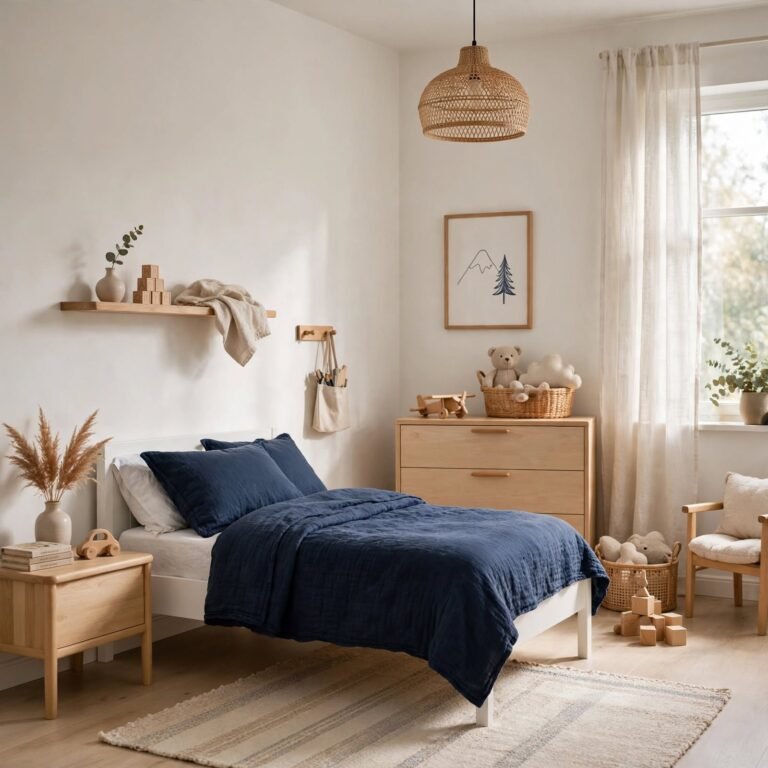
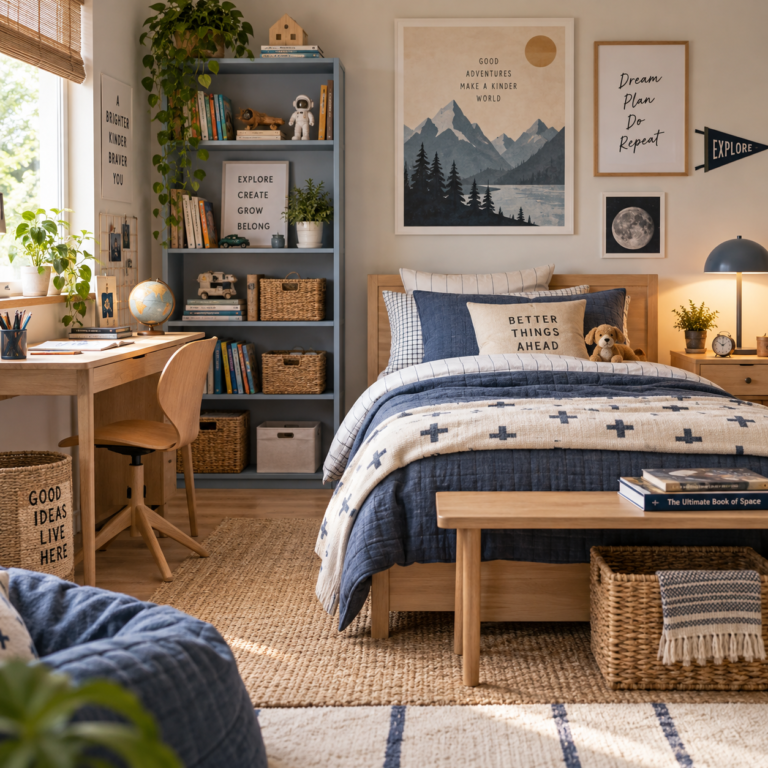
Does the color palette still feel balanced when surrounded by bedding, lighting, and wood tones?
Seeing the artwork in context often leads to small adjustments before the product feels finished.
Keeping the Room Calm
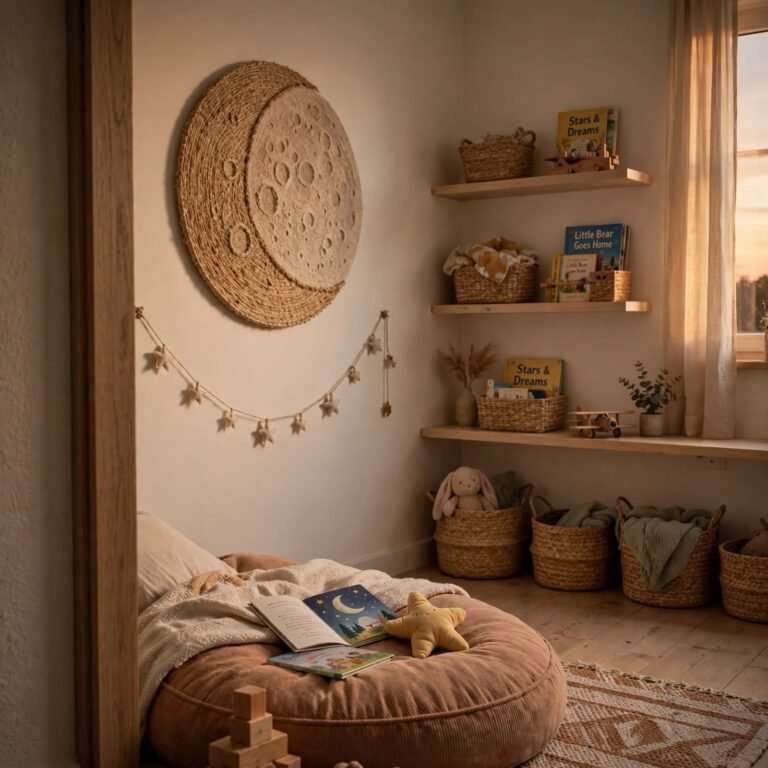
Children’s rooms naturally contain many visual elements—books, toys, bedding, furniture, and personal belongings.
Wall art should add something to the room without becoming another source of clutter.
That is why North & Nook designs often rely on one clear scene, a strong focal point, and enough open space around it.
The goal is not to make the artwork quiet or boring.
It is to make it imaginative in a way that still feels comfortable to live with.
The Finished Piece
By the time a piece of wall art reaches the product page, much of the design process is no longer visible.
The original idea, changes in composition, rejected versions, color adjustments, scaling decisions, and print preparation all disappear behind one finished image.
That is exactly how it should feel.
The final piece should look simple and natural in the room, even if a lot of thought went into getting it there.
For North & Nook, a finished piece of wall art is not only an illustration.
It is an object designed to become part of a child’s space—something that can add imagination, personality, and a sense of discovery without overwhelming the room.
Title: From an Idea to a Finished Piece of Wall Art
Slug: from-an-idea-to-a-finished-piece-of-wall-art
Suggested excerpt: See how a North & Nook wall art design develops from an initial idea into a finished piece, including composition, color, scale, print preparation, and realistic room mockups.