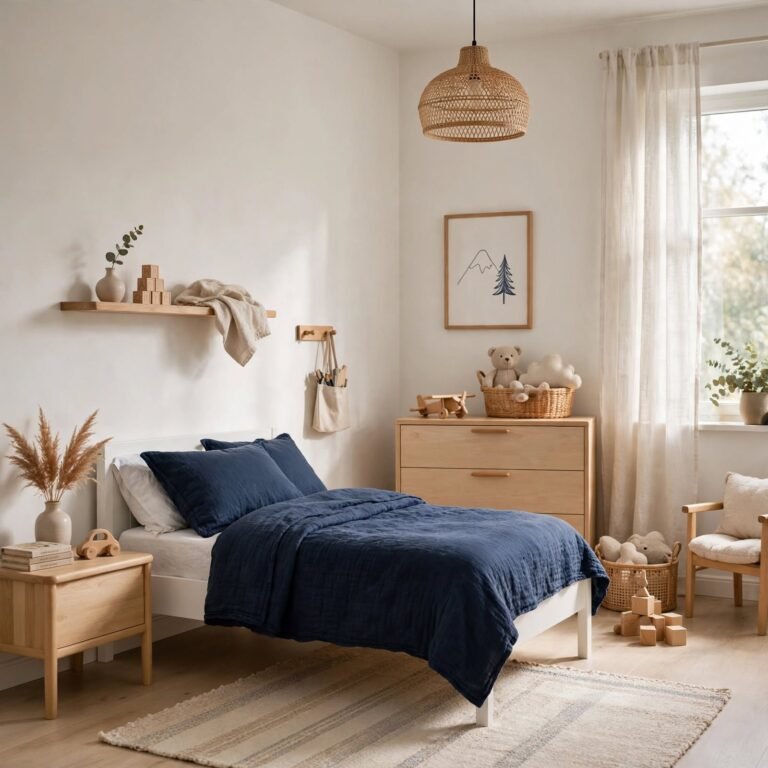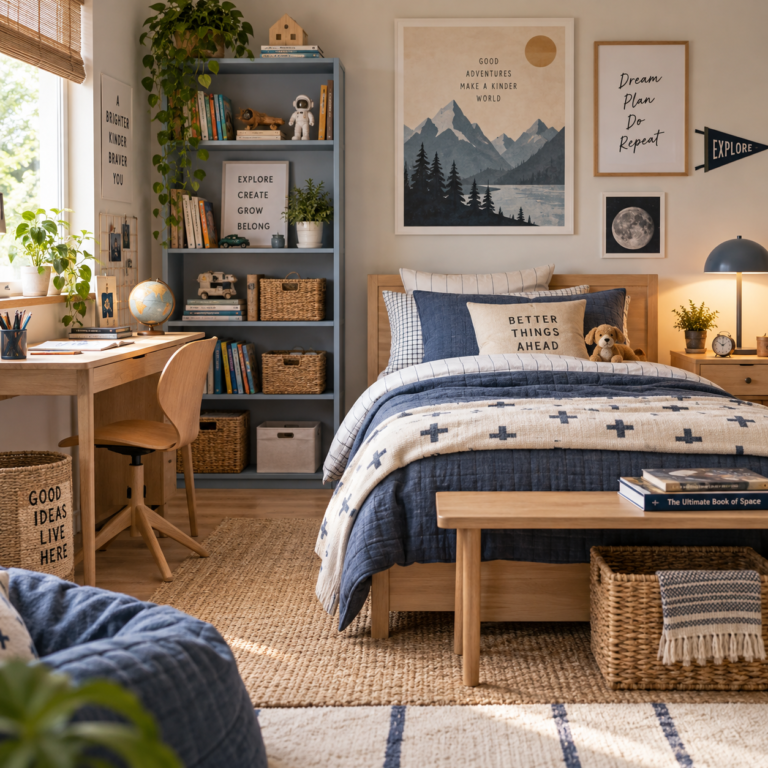

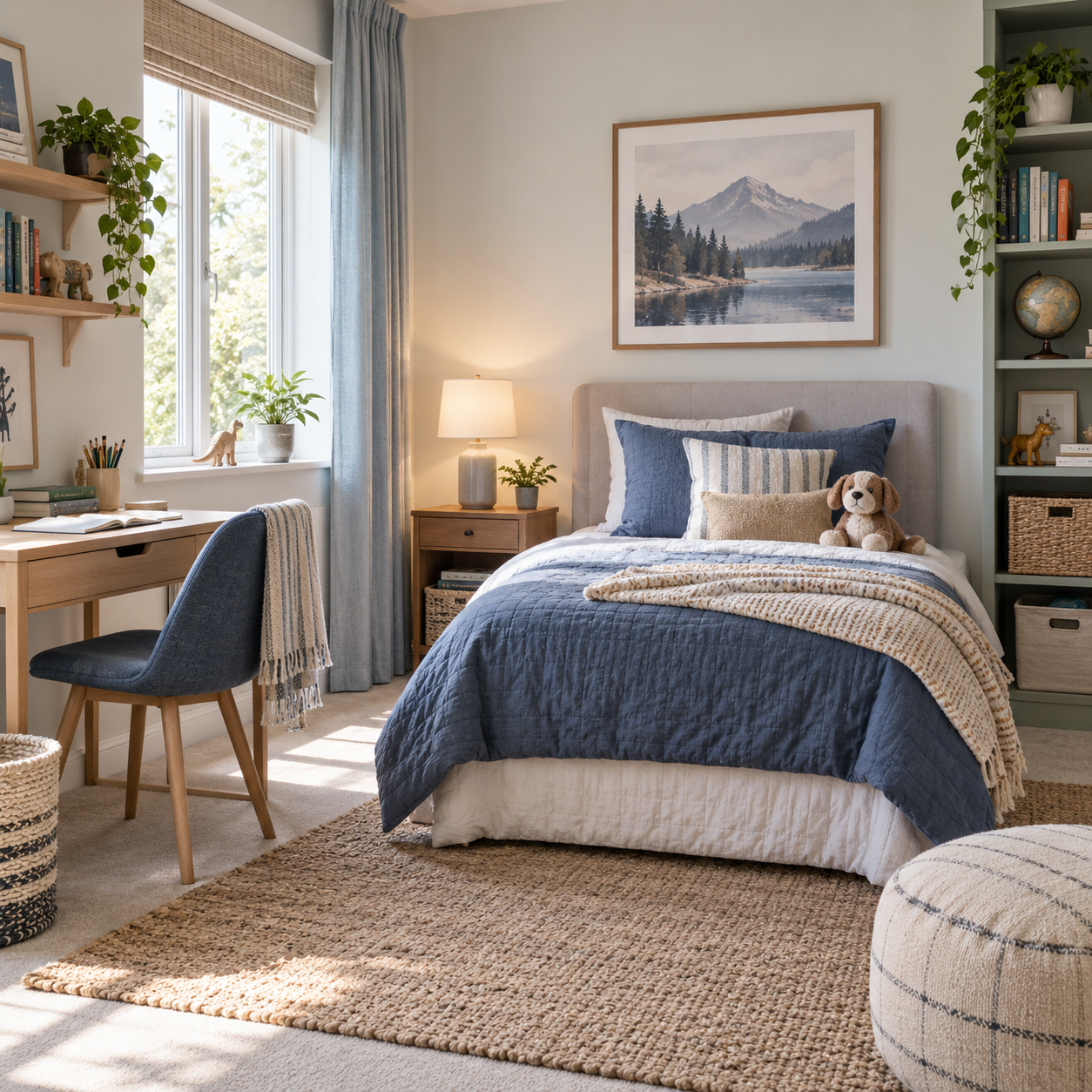
A child’s room can change quickly.
What feels right at age five may start to feel too young a few years later, even if the furniture is still perfectly usable. The good news is that updating a kids room does not have to mean replacing everything.
Often, a few thoughtful changes can make the room feel more mature while keeping the parts that still work.
Here are 10 ways to refresh a child’s room as they grow.
1. Replace Very Childlike Wall Art
Wall art is one of the easiest things to change as a child gets older.
A room that once featured cartoon animals or very playful illustrations might gradually shift toward space, ocean, nature, abstract designs, photography, maps, or more detailed artwork.
Changing the artwork can make the room feel noticeably older without changing the furniture at all.
2. Update the Bedding
Bedding has a big visual impact because it covers so much of the bed.
Instead of replacing the bed itself, try changing the duvet cover, blanket, or pillows.
You can move from bright character-based designs to stripes, checks, simple patterns, deeper colors, or a more restrained version of the child’s current interests.
This is one of the quickest ways to change the mood of the room.
3. Simplify the Color Palette
Young children’s rooms often use many bright colors at once.
As children grow, a more limited palette can make the space feel calmer and more mature.
You do not have to remove color completely. Instead, choose two or three main tones and let them repeat through bedding, artwork, rugs, or accessories.
A simpler palette can make the whole room feel more intentional.
4. Make Space for Schoolwork
As children get older, the room may need to support more than sleeping and playing.
A small desk or dedicated homework area can help the room grow with them.
It does not need to be complicated. A simple desk, comfortable chair, good lighting, and a little storage for school supplies may be enough.
The important part is creating a place that feels separate from the bed and play area.
5. Rethink Toy Storage
Toy storage usually changes as children grow.
Large bins of toys may gradually become storage for books, art materials, building sets, sports equipment, electronics, or hobby supplies.
Instead of removing storage entirely, adapt it.
Shelves, baskets, drawers, and cabinets can continue to work for years if they are flexible enough.
6. Create Room for New Interests
Children’s interests change, and their rooms should have space to reflect that.
A child who once loved dinosaurs might later become interested in drawing, music, science, gaming, sports, or reading.
You do not need to redesign the whole room around every new interest.
A shelf, desk corner, display area, or one piece of artwork can be enough to make the room feel current and personal.
7. Reduce Decorations That Feel Too Young
Sometimes the room does not need anything new.
It simply needs fewer things.
Removing old wall stickers, babyish decorations, unused toys, or accessories that no longer reflect the child can make a surprising difference.
This also creates room for the child to decide what they actually want to keep.
8. Upgrade the Lighting
Lighting is another simple way to make a room feel older.
A small reading lamp, desk lamp, or more refined bedside light can change the character of the space without requiring major work.
Older children may also need better task lighting for reading, drawing, or homework.
Good lighting makes the room more functional as their daily routines change.
9. Let the Child Have More Input
As children get older, they usually have stronger opinions about their space.
That does not mean they need complete control over every decision, but giving them choices can make the room feel more personal.
You might let them choose between two wall art options, select bedding colors, decide what to display, or choose where certain items belong.
The room becomes more meaningful when the child feels involved in shaping it.
10. Keep the Main Pieces Flexible
The easiest rooms to update are usually built around furniture that does not belong to one specific age.
A simple bed, dresser, shelving unit, and desk can often stay for many years.
Then smaller elements—artwork, bedding, rugs, cushions, lamps, and accessories—can change as the child grows.
This approach reduces the need for complete room makeovers and makes each update easier.
A Room Does Not Need to Change All at Once
Updating a child’s room is usually better as a gradual process.
One year it might be new artwork. Later, the bedding changes. A desk is added when schoolwork becomes more important. Toys slowly give way to books, hobbies, or personal collections.
The room can grow in the same way the child does—step by step.
The goal is not to make the space feel more adult as quickly as possible. It is to create a room that still feels comfortable, personal, and appropriate for where the child is now.